
Prepared for residents of Independence, Louisiana, and the surrounding Tangipahoa Parish
Fire moves fast. Panic wastes time. Preparation decides survival. The goal is simple containment and a clean escape that gives firefighters room to win.
In 2023, there were 1,389,000 fires in the U.S., resulting in 3,670 civilian deaths and 13,350 injuries. That means every two to three minutes, somewhere in the country, firefighters are racing to another emergency. How you spend the first five minutes before they arrive determines whether they save property or lives.
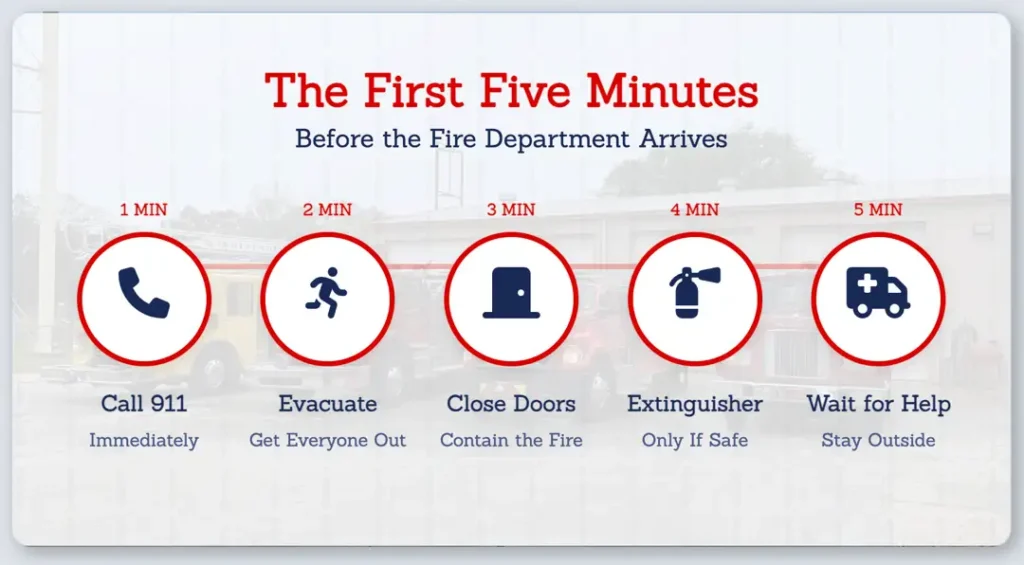
Think sequence, not heroics. Call for help, clear the home, slow the spread, then wait outside and guide arriving crews. These steps fit houses, apartments, and mobile homes. They work during the day and night. They respect the clock.
| Step | Action | Purpose | IVFD Tip |
|---|---|---|---|
| 1 | Call 911 immediately | Starts dispatch, prompts pre-arrival instructions, launches the response clock | Put your address on a sticker by every phone. Teach kids to say it clearly. |
| 2 | Alert and evacuate everyone | Removes people from smoke and heat before conditions turn lethal | Use the word fire loudly. Bang on doors. Do not split up without a meeting spot. |
| 3 | Close doors on your way out | Slows fire and smoke, buys breathable air for rooms not yet involved | Bedroom doors stay closed at night. Install latches that kids can use. |
| 4 | Use an extinguisher only if safe | Stops a small fire before it grows, keeps exit route clear | Stand between the fire and your exit. If you cannot see the base, leave. |
| 5 | Stay out and account for everyone | Prevents re-entry deaths and gives firefighters clear access | Meet at a fixed landmark such as a tree or mailbox away from the home. |
Why Every Second Counts
Fire doubles in size roughly every thirty seconds. The U.S. fire death rate was 13.1 deaths per million population in 2023. The odds change dramatically for homes that act quickly before fire crews arrive. According to FEMA, approximately 230,500 one- and two-family residential fires are reported each year, with most occurring in homes that lack early containment actions.
Step 1: Call 911 Early
Do it first. Size does not matter. A small fire grows while you hesitate. Dispatchers can stay on the line and guide you through the next move. Make that call before trying to grab an extinguisher. Early calls save lives.
Step 2: Get Everyone Out
Shout fire and move. Help kids, older adults, and anyone with mobility needs. Crawl low under smoke. Feel doors with the back of your hand. If hot, find another route. Two escape routes per room give you options when hallways fill. According to National Fire Protection Association data, 74 percent of homes have smoke alarms; however, only 59 percent of these alarms are functioning properly when fires start—maintenance matters.
Apartment guidance: Pull the building alarm if available. Use stairs, never elevators. If smoke blocks the hall, close your unit door, seal gaps with towels, and signal from a window while staying on the 911 line.
Step 3: Close Doors As You Leave
Closing doors limits air flow and heat. A closed door can keep temperatures ten times lower on the other side and cut smoke levels in half. Research from USFA shows that most fires spread rapidly when interior doors are left open.
Step 4: Use Fire Extinguishers Safely
Portable extinguishers are effective in putting out 80 percent of small fires when used correctly. Always stand with a clear exit behind you and use the PASS method: Pull, Aim, Squeeze, Sweep. If the fire grows beyond a small container, leave immediately. In rural areas like Tangipahoa Parish, only 9 percent of fires are extinguished by portable units due to delayed detection and the distance involved.
Step 5: Stay Outside and Guide Crews
Once out, stay out. Count heads and meet at the landmark—report who is missing and where they were last seen. Firefighters need clear access and accurate information more than anything else during the first minute of arrival.
Containment Tactics That Buy Time
Close windows and doors, turn off HVAC systems if safely accessible, and direct arriving crews to hazards such as propane tanks or oxygen cylinders. Containment saves structure and life alike. Firefighters arriving in Independence, LA, can often reach homes in minutes, but even those short minutes feel long inside a burning room.
Preparation That Simplifies the First Five Minutes
- Install smoke alarms in each bedroom, hallway, and level.
- Test alarms monthly. Replace batteries twice a year.
- Plan two escape routes for each room and practice them twice a year.
- Mount multipurpose ABC extinguishers in the kitchen and garage.
- Post large reflective house numbers visible from the street for responders.
Community Support: Independence Volunteer Fire Department provides public education on smoke alarms, CPR, and fire safety planning. For help installing detectors or reviewing a home escape plan, attend a local IVFD outreach event or contact the station directly.
Why Preparation Beats Panic
Cooking remains the top cause of residential fires, responsible for 51 percent of incidents. Many start when residents try to fight flames with the wrong method or re-enter to save belongings. Between 2007 and 2011, home fires caused 2,570 deaths and 13,210 injuries each year, numbers that have barely improved. Panic kills; planning saves.
Firefighters in Independence train for speed, but they depend on you to use those first five minutes wisely. Contain the fire, clear the house, close the doors, and make the call. Preparation not only saves property, but it also gives professionals the time to save you.
Sources: NSC Injury Facts, USFA/FEMA, NFPA, BHHCSafetyCenter.