
Prepared for residents of Independence, Louisiana, and the surrounding Tangipahoa Parish
The worst alarm is the one that never goes off. Every smoke detector has a life determined by its power source, placement, and care. Neglect any link in that chain and your early warning system becomes a silent trap.
Almost every home in America reports having at least one smoke alarm, yet thousands still die in fires each year because those alarms don’t work. In many home fires where smoke alarms failed to operate, the cause was often dead batteries or a disconnected power source. That’s not a rare malfunction—it’s a fixable mistake.
This guide explains why smoke alarms fail, how to keep yours functioning properly, and how the Independence Volunteer Fire Department can assist you in protecting your home. Your safety depends on staying ahead of these small but critical details.
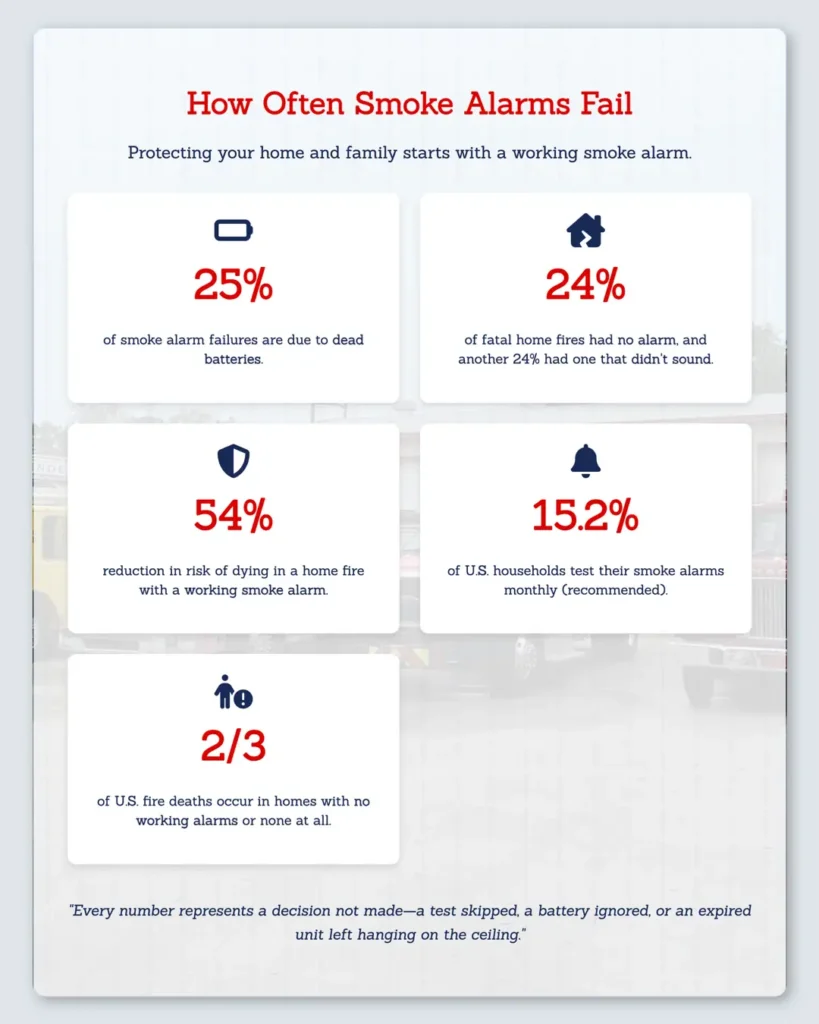
How Often Smoke Alarms Fail
- Between 2012 and 2016, 25 percent of smoke alarm failures were attributed to dead batteries.
- In fatal home fires, 24 percent of homes had no alarm, and another 24 percent had one that didn’t sound.
- Having a working smoke alarm cuts the risk of dying in a house fire by about 54 percent.
- Only 15.2 percent of U.S. households test their smoke alarms monthly, despite the national recommendation being to do so.
- Nearly two-thirds of U.S. fire deaths occur in homes with no working smoke alarms or none at all.
Every number represents a decision not made—a test skipped, a battery ignored, or an expired unit left hanging on the ceiling.
Common Reasons Smoke Alarms Fail
1. Dead or Disconnected Batteries
Most failures come down to power. People remove batteries after nuisance chirps or forget to replace them after they die. The result is predictable silence when it matters most.
2. Expired Sensors and Old Units
Smoke detectors typically last about ten years. Sensors degrade, and response times slow. Check the manufacture date printed on the back. If it’s over a decade old, replace it—no exceptions.
3. Wrong Placement
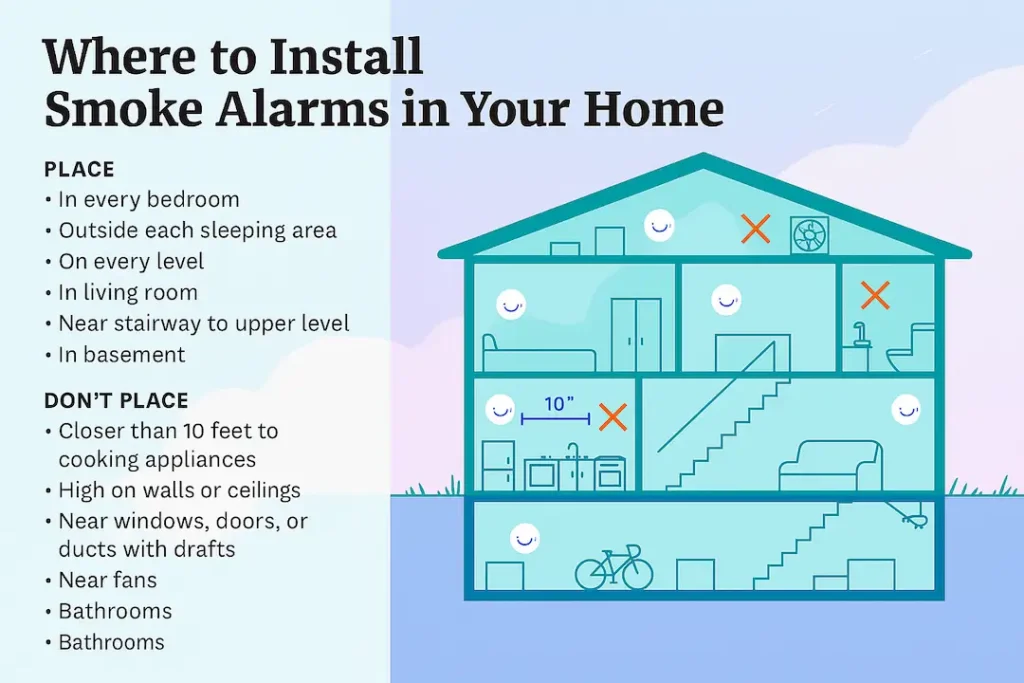
Smoke rises, but drafts and architecture matter. Detectors placed too low, too close to vents, or in corners may never sense smoke early. Each level of your home, every hallway, and each bedroom needs a properly located unit.
4. Dust, Dirt, and Insects
Vents clogged with debris reduce sensitivity. Vacuum or gently blow out detectors twice a year to keep them clear.
5. Electrical or Wiring Problems
Hardwired systems rely on stable power and functional backup batteries. Tripped breakers, loose connections, or missing backups turn “hardwired” into “nonfunctional.”
6. Cheap or Defective Devices
Low-cost, uncertified alarms can fail under real conditions. Always purchase UL-listed or equivalent certified devices and register them to receive recall alerts.
7. Human Behavior
Disabling alarms during cooking, ignoring chirps, or skipping tests renders reliable technology ineffective. Awareness—not just hardware—keeps people alive.
How to Keep Yours From Joining the Statistics
Test Monthly
Press the test button until you hear a full, loud tone. A weak beep means it’s time to replace the battery—or the entire unit. Testing takes seconds. Regret lasts forever.
Replace Batteries or Use 10-Year Sealed Units.
For replaceable-battery models, change batteries at least once a year. Better yet, install 10-year sealed lithium units that don’t require battery swaps.
Replace Units Every 10 Years
Even if the light blinks and the test tone sounds, the sensing chamber weakens over time. Treat alarms like perishables: when they hit their expiration date, toss them.
Install Them Correctly
- One in every bedroom.
- One outside each sleeping area.
- One on every level of the home, including basements and attics with utilities.
Mount them on the ceiling or high on a wall, away from vents and ceiling fans that can redirect smoke.
Clean Regularly
Vacuum openings gently and wipe the exterior. Never paint over detectors or tape them to stop nuisance alarms.
Stay Connected
Use interconnected models so when one sounds, all do. This ensures people in distant rooms hear the warning immediately.
Never Disable During Cooking
If cooking sets off frequent alarms, consider moving the detector a few feet farther away from the stove or using a hush-button model. Don’t remove the battery—it’s not a kitchen timer.

Community Help From IVFD
The Independence Volunteer Fire Department offers a free smoke detector installation and replacement program for residents who require assistance. Our firefighters will assist you in selecting the correct device, installing it in the safest location, and demonstrating how to test it properly. Contact the department through the Town of Independence to schedule an appointment or attend an upcoming safety event.
Your Maintenance Plan
- Press the test button monthly.
- Replace batteries annually or use 10-year sealed units.
- Vacuum and dust detectors twice a year.
- Replace every unit after 10 years of service.
- Ensure full coverage on all floors and sleeping areas.
Why It Matters
Fire can double in size every 30 seconds. Without an early warning, even a small kitchen fire can quickly escalate into a deadly situation. A working smoke alarm gives you time—time to wake, time to act, time to live. Don’t trust luck. Trust maintenance, testing, and the resources your fire department provides.
Sources: National Fire Protection Association, U.S. Consumer Product Safety Commission, Drexel Fire Safety, ICARIS-2 Survey, Washington County Smoke Alarm Fact Sheet.